Exploring the Complexities of Foreign Hybrid Rules in Practice
The introduction of the foreign hybrid regime marked a significant turning point in the evolution of partnership taxation in Australia. Previously, these rules were largely domestically focused and often lacked coordination, creating practical uncertainty for taxpayers.
The shift towards taxing foreign partnerships, particularly those established in the United States, has elevated Australia’s partnership tax regime into a far more complex international framework. While this expansion has broadened the scope of the rules, it has also introduced a range of anomalies and unintended outcomes in practice.
In this second instalment, Buck Xiao of Hall Chadwick continues his examination of Australian and US partnership taxation, focusing on the interaction between the two systems through the foreign hybrid rules. This article provides practical guidance for businesses navigating the complexities of operating a US foreign hybrid structure and avoiding potential pitfalls.
READ PART TWO OF THE SERIES BELOW:
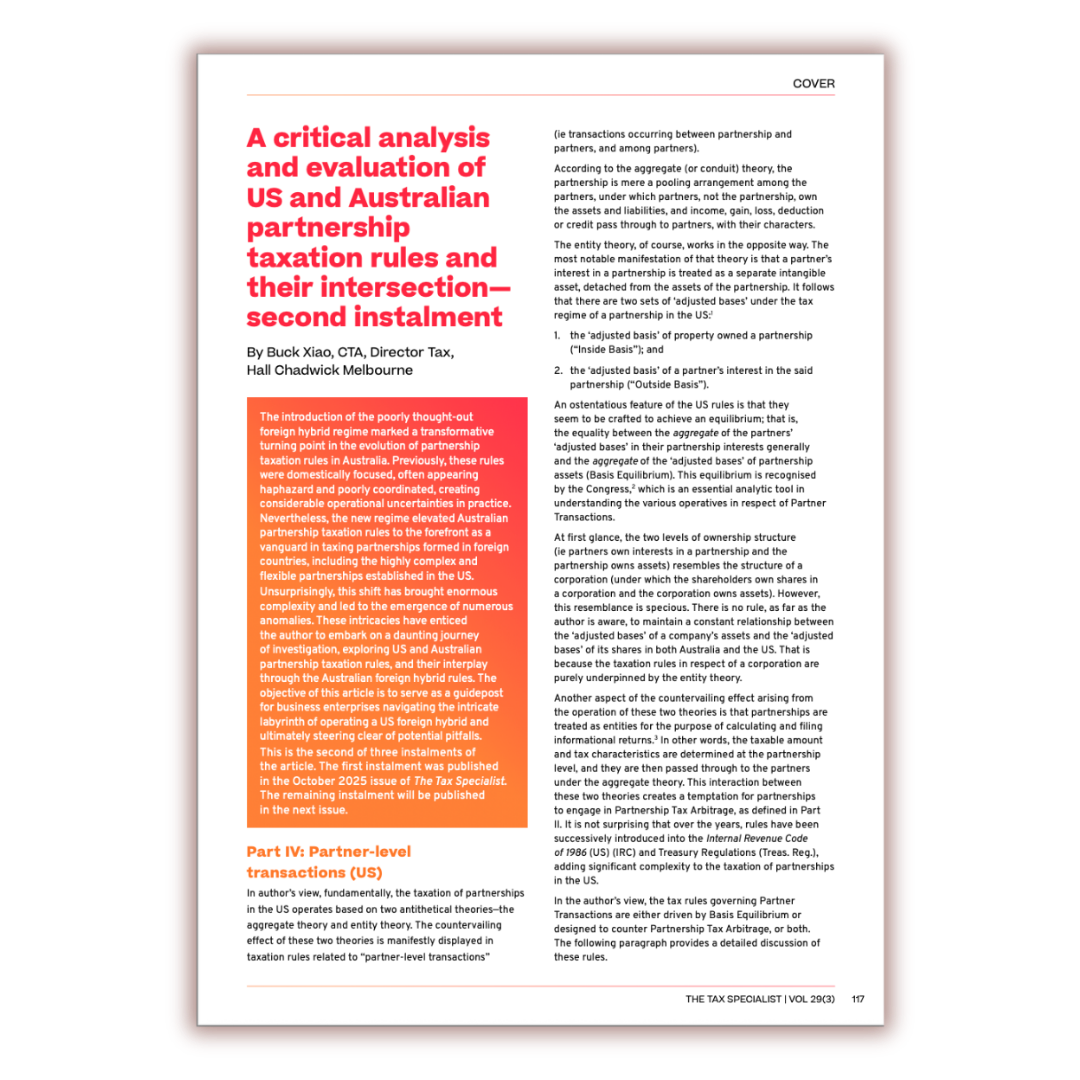
Stay tuned for Part Three.
If you would like to understand how these developments may impact your business, contact Hall Chadwick’s Corporate Tax team for tailored advice.